2022 LGBTQIA+ Pride Events

Below are LGBTQIA+ Pride events taking place in the Greater Boston area. We have tried to provide as much information as possible, but in some instances, you may need to search online for additional information for events you are interested in attending.

Saturday, May 21 from 9:30 – 4pm, Youth Pride at The Greenway at India St and Atlantic Ave in Boston  

Wednesday, June 1, at 5:30pm, Pride flag raising at Woburn City Hall

Wednesday, June 1, at 5pm, Boston Pride Month Kickoff,Boston City Hall

Saturday, June 4, Trans Pride: A Celebration of Liberation,Boston City Hall Plaza

Saturday, June 4, from 3-5pm, Pride flag raising in Framingham

Saturday, June 4, at 9am, Medway Flag raising ceremony, Choate Park

Saturday, June 4, from 11am-4pm, Waltham Pride

Saturday, June 4, from 11am-4pm, Watertown Pride

June 5th ,1-3pm, Bolton Pride 

Sunday, June 5 from 7:30-10:30pm painting the crosswalk at the intersection of Mystic Ave. and Massachusetts Ave, Arlington.

Tuesday, June 7 from 7:30-10:30pm painting the crosswalk at the intersection of Park Ave. and Massachusetts Ave, Arlington

Thursday, June 9 from 7:30-10:30pm painting the crosswalk at the intersection of Lake Street and Massachusetts Ave., Arlington

Wednesday, June 8, from 5-7pm, Winchester PrideFest, Winchester Town Common

Friday, June 10, from 3:30 – 6:30 pm, Cambridge Schools Community Pride Day,CRLS

Friday, June 10, at 7pm Boston Dyke March Boston Common: Parkman Bandstand

Saturday, June 11 at 9am Cambridge Pride Brunch, Cambridge City Hall

Saturday, June 11 from 1-3pm or at 4pm  Belmont Pride parade/picnic/bands,Belmont town green (404 Concord Ave)

Sunday, June 12 from noon-3pm, Lexington Pride,Lexington Visitors Center lawn

Sunday, June 12 from 2-5pm Arlington Pride Festival,Town Hall Gardens, in Town Hall if rain.

Sunday, June 12, 4pm Boston Choral Ensemble (BCE) Pride Concert, First Church Cambridge in Harvard Square

Sunday, June 12 Pop-Up Pride in Boston 

Sunday, June 12 at noon Sharon Pride Car Parade & stage events, Memorial Park Beach, Beach St, Sharon, MA

Sunday, June 12 from 2-4, Needham Pride, 

Saturday, June 18, from 2-6pm,OUT MetroWest Pride Event,Exhibit A Brewing Company

Sunday, June 19 from 3-5:30pm Hopkington Pride, 

Saturday, June 25, from 8am-5pm, North Shore Pride Parade and Festival, Salem

Saturday, June 25 at noon Trans Resistance’s 3rd Annual Trans Resistance , Franklin Park

Saturday, June 25 at 8pm BGMC Disney PRIDE in Concert , Symphony Hall

Sunday, June 26, at 3pm, BGMC Disney PRIDE in Concert , Symphony Hall

Sunday, June 26 from noon-4pm Franklin Pride 

Introduction to Domestic Partnership Bylaw Amendment

Arlington Town Meeting approved amendments to the town’s Domestic Partnership Bylaw, which recognizes families of two or more adults. The Domestic Partnership Bylaw proposal was created by the 2021 Town Meeting. With its passage, Arlington became the first town in the state to enact a bylaw recognizing polyamorous relationships. The bylaw was reviewed for any potential conflicts with state law by the attorney general’s office after passage and was found to be legal.

The Rainbow Commission submitted an article to the 2022 Town Meeting to amend the bylaw to more clearly define the parameters of domestic partnerships in Arlington and the administrative processes related to them. It also specified employment benefits with relation to domestic partnerships in Arlington. The proposal was approved with 162 votes in favor, 68 votes in opposition, and 9 abstentions. Rainbow Commission Co-Chair Susan Ryan-Vollmar introduced the article to Town Meeting. Her remarks are below:

I’m Susan Ryan-Vollmar, a Town Meeting member from Precinct 19. I am also one of the co-chairs of the Rainbow Commission, which placed Article 11 on the warrant. 

I’m here with Amos Meeks, a Town Meeting member from Precinct 3. Those of you present for Town Meeting last year will remember Amos as the courageous driver of the town’s groundbreaking domestic partnership bylaw. 

Arlington should be proud of being the first town in the state to enact a bylaw recognizing polyamorous relationships. Our bylaw was reviewed for any potential conflicts with state law by the attorney general’s office after passage. It was found to be entirely proper and legal. 

The most urgently needed benefit accorded through Arlington’s domestic partnership bylaw is the right to visit your partner in the hospital. Some of the proposed changes to the town’s bylaw in Article 11 affect this right and so it is vital that ARTICLE  11 is approved. 

The push to legalize domestic partnerships in Massachusetts began in the late 1980s when an HIV infection was a death sentence. Many hospital administrators routinely denied visitation rights to the partners of gay men dying of AIDS. So having a piece of paper in hand certifying that you had the legal right to visit your life partner as he lay dying was life-changing. 

Today, hospital administrators continue to turn away loved ones in non-traditional relationships. The first requirement to be able to visit a loved one or designate the loved ones who can visit you, is for your relationship to be recognized in some official form. If you do not have that official recognition, you will not have hospital visitation access. 

Under Arlington’s domestic partnership bylaw, if one member of a partnership dies, then the entire partnership is dissolved. Article 11 will update that language so that the death of one partner will not dissolve the loving relationship of surviving members. Dissolving a polyamorous relationship even temporarily, such as between the time of one partner’s death and the time when surviving partners can re-register, needlessly exposes loving partners to the emotional devastation of being turned away at the hospital door.   

Other changes to the town’s domestic partnership bylaw that will be made with the passage of ARTICLE 11 include a new section on employment benefits that town employees in registered partnerships would be eligible for. 

Those benefits include paid bereavement, sick, and parental leave. 

These employment benefits will not cost the town any money. The number of days a town employee can take for parental leave is governed by state law. The number of days a town employee can take to care for the sick parent of a partner is governed by the federal Family and Medical Leave Act. The number of paid bereavement days an employee can take is five days per death. If an employee needs more time off than allotted for parental, sick, or bereavement leave, they must use accrued personal or vacation leave before taking unpaid leave. 

Town employees who register for a domestic partnership will not be able to extend their health insurance benefits to their domestic partners. That would violate state law. 

Since the domestic partnership bylaw was enacted, there have been three registered partnerships in Arlington. At $30 per registration, the town has collected $90 in fees. No town employee has registered. 

Finally, Article 11 would remove the provisions that people in registered domestic partnerships must share their living expenses and live together. 

It is true that these provisions are common in domestic partnership bylaws. That  is how they made it into Arlington’s bylaw in the first place. 

But the provenance of these provisions reside in the deep homophobia of the 1980s and 1990s. 

As a young news reporter in Boston, some of the first stories I ever covered were of the raucous Boston City Council hearings in the early 1990s during which several different domestic partnership ordinances were debated. At those hearings, I heard every argument that has ever been made against any proposal whatsoever that would grant recognition to non-traditional relationships. 

By far, the most ridiculous—yet strangely effective—argument was the claim that heterosexual employees would pretend to be gay in order to extend their health benefits to friends and family members. 

To counter this anticipated onslaught of fraud, it became common for municipalities and businesses to impose stringent requirements on employees seeking domestic partnership benefits. That is why it is much harder to register for a domestic partnership than to get a license to marry. 

If you want to get a marriage license at Arlington Town Hall you need to show up with your future spouse, prove that you are over the age of 18, fill out an intent to marry form, and pay a $30 registration fee. To register a domestic partnership, all partners must come to Town Hall, pay a $30 registration fee, and “jointly proclaim under the pains and penalties of perjury that: They have made a commitment of mutual support and caring for their domestic partners; that They reside together and intend to do so indefinitely; and that They share basic living expenses.”

When compared with the strength of protection offered by marriage, domestic partnerships are like an overcooked and soggy piece of spaghetti. It makes no sense to impose greater eligibility requirements on people seeking to register their domestic partnership than those seeking a license to marry. 

I want to conclude my introduction to Article 11 by expressing my deepest empathy for Amos and his family. 

My wife and I met in college when we were 18. We became parents after we had been together for 20 years. I could speak for days describing the insults and injuries—which include denial of hospital visitation— that we endured throughout the horrible time when our relationship had no legal protection. We spent tens of thousands of dollars throughout those years on legal fees to adopt children I gave birth to, legal fees on domestic partnerships and other arrangements such as health care proxies and power of attorney that we would not have needed if our relationship had legal recognition. In addition to those literal costs, there were other costs on which no price can be attached – the costs to your own sense of well-being and the toll on your relationship when it  isn’t recognized by health care providers, town clerks, tax accountants, and sometimes even members of your own family. 

It is shameful that Town Meeting has any power whatsoever over Amos’s family. No member of Town Meeting has done anything to deserve that power any more so than the representatives who debated marriage equality in Massachusetts had done anything to warrant the power they once wielded over my family.

But this is where we are and this is how things work.

Since I am a member of Town Meeting and I do have this power, I will exercise it judiciously and with humility. 

I urge each of you in the strongest possible terms to do the same. 

Please reject the Moore amendment. Although it may have originated with the best of intentions for the town, it is rooted in a legacy of homophobia and it is based on a complete lack of understanding of the laws governing paid parental and family and medical leave.  

And please support Article 11. It is the absolute least we can do for Amos, his family, and our other neighbors who need this recognition and protection.

Rainbow Commission endorses Warrant Article 8

The 2022 Town Meeting starts on Monday, April 25. One of the Warrant Articles to be considered by Town Meeting this year would establish a Civilian Police Advisory Commission. During its April 14, 2022 meeting the Rainbow Commission unanimously voted to endorse passage of Warrant Article 8. Here is the letter we sent to Town Meeting members.

April 20, 2022

Dear Town Meeting,

We are writing to express our support for Warrant Article 8, which would establish a Civilian Police Advisory Commission in the Town of Arlington.

We believe that the creation of a a Civilian Police Advisory Commission holds the potential to be a powerful tool to build trust between Arlington’s LGBTQIA+ residents and the Arlington Police Department (APD).

Arlington’s LGBTQIA+ population reflects that of Massachusetts’s, which is diverse and disproportionately young. A 2018 report by The Boston Foundation and The Fenway Institute at Fenway Health found that 10 percent of 25 to 34-year-olds in Massachusetts identify as LGBTQIA+. The percentage is even greater—nearly 16 percent—among 18 to 24-year-olds.

It is vitally important that APD services are available for all town residents, including those who are LGBTQIA+. Unfortunately, LGBTQIA+ people and transgender people in particular consistently report experiencing negative interactions with law enforcement officers and the criminal justice system.

A 2015 survey of transgender people in Massachusetts found that over half (52%) reported being “verbally harassed, repeatedly referred to as the wrong gender, physically assaulted, or sexually assaulted, including being forced by officers to engage in sexual activity to avoid arrest” during their encounters with law enforcement.

Consequently, many gender diverse people, including those who reside in Arlington, are extremely reluctant to initiate interaction with police officers, even when they have been the victim of violent crime.

In 2020 and 2021, the LGBTQIA+ Rainbow Commission collaborated with APD on a project to improve APD’s ability to respond in culturally appropriate ways to transgender people who have reported a crime, been involved in a motor vehicle accident, or are suspected of having committed a crime. Working with two nationally-recognized experts in health, law, and public policy affecting transgender people, we offered suggestions for updating APD’s policy on interacting with transgender and gender diverse individuals.

The policy was updated and officers received training. During our March 17, 2022 meeting, Lt. Greg Flavin of APD reported back to the Rainbow Commission about how the new policy was being implemented.

We believe that this example of collaborating toward the shared goal of improving the quality of service for LGBTQIA+ residents can serve as a model for the new Civilian Police Advisory Commission. By organizing such efforts under one Commission dedicated to improving trust among residents and police, we believe that opportunities for improving the experiences that residents who belong to historically marginalized groups have with police will be more readily identified and that potential solutions will be more swiftly implemented.

The LGBTQIA+ Rainbow Commission voted unanimously to endorse Warrant Article 8 and we respectfully request that you vote to support it.

Lisa Krinsky and Susan Ryan-Vollmar

Co-Chairs, LGBTQIA+ Rainbow Commission on behalf of the full LGBTQIA+ Rainbow Commission

Town of Arlington to LGBTQIA+ students: You belong

We’re only a quarter of the way through 2022, but the year has already been a tough one for LGBTQIA+ people, especially transgender children and adolescents and their parents. Lawmakers across the country have filed a record-breaking 238 anti-LGBTQIA+ bills with discriminatory policies being put in place in Texas and anti-LGBTQIA+ measures being signed into law in Tennessee, Florida, and Alabama. Most of these measures aim to silence LGBTQIA+ children and families, prevent transgender kids from playing sports, and block gender diverse children from receiving medically necessary health care.

But the town of Arlington recently sent a different message altogether to its LGBTQIA+ children, adolescents, and families.

That message was a simple one: We love you just the way you are.

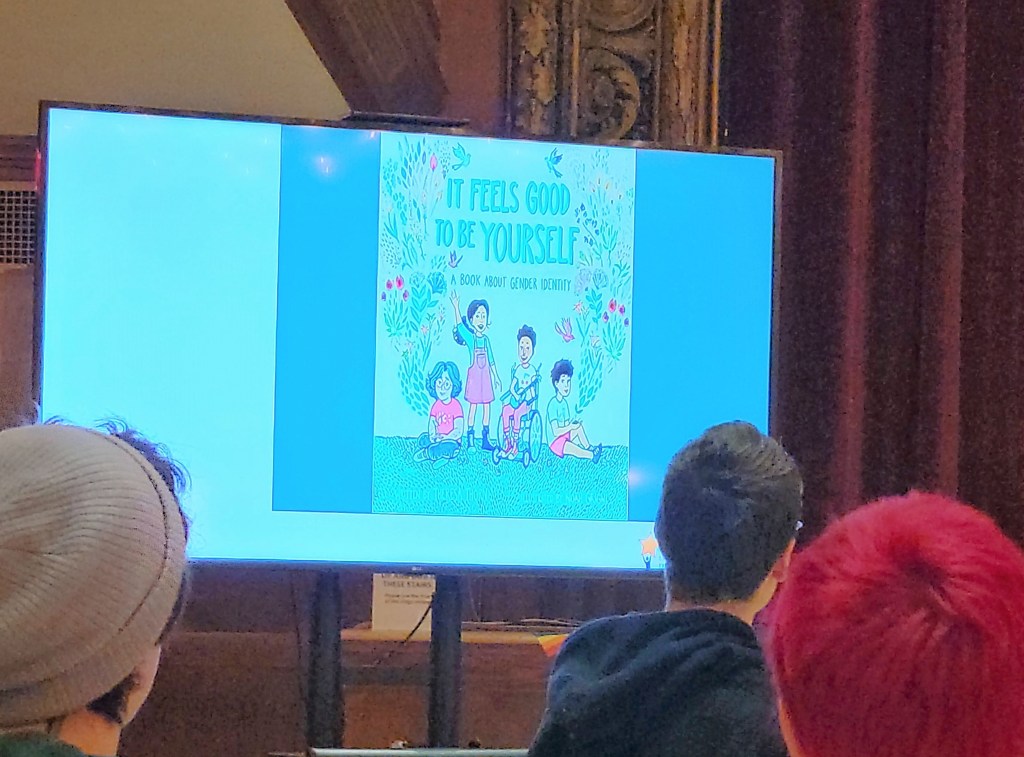
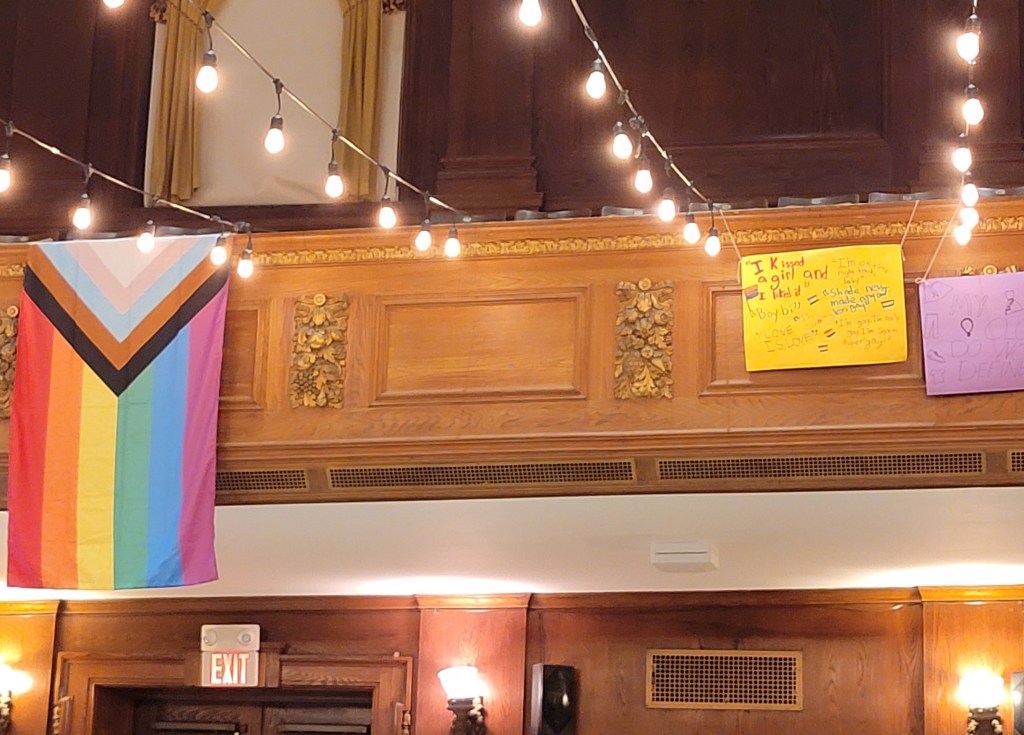
On March 29, the Arlington Public School’s LGBTQIA+ Rainbow Task Force, the Arlington Human Rights Commission, and the Arlington LGBTQIA+ Rainbow Commission jointly sponsored an “LGBTQIA+ Community Conversation” at Arlington Town Hall. About 80 students, parents, teachers, and other community members showed up to hear LGBTQIA+ students talk about what it’s like to attend school in Arlington and what they like best about their schools.

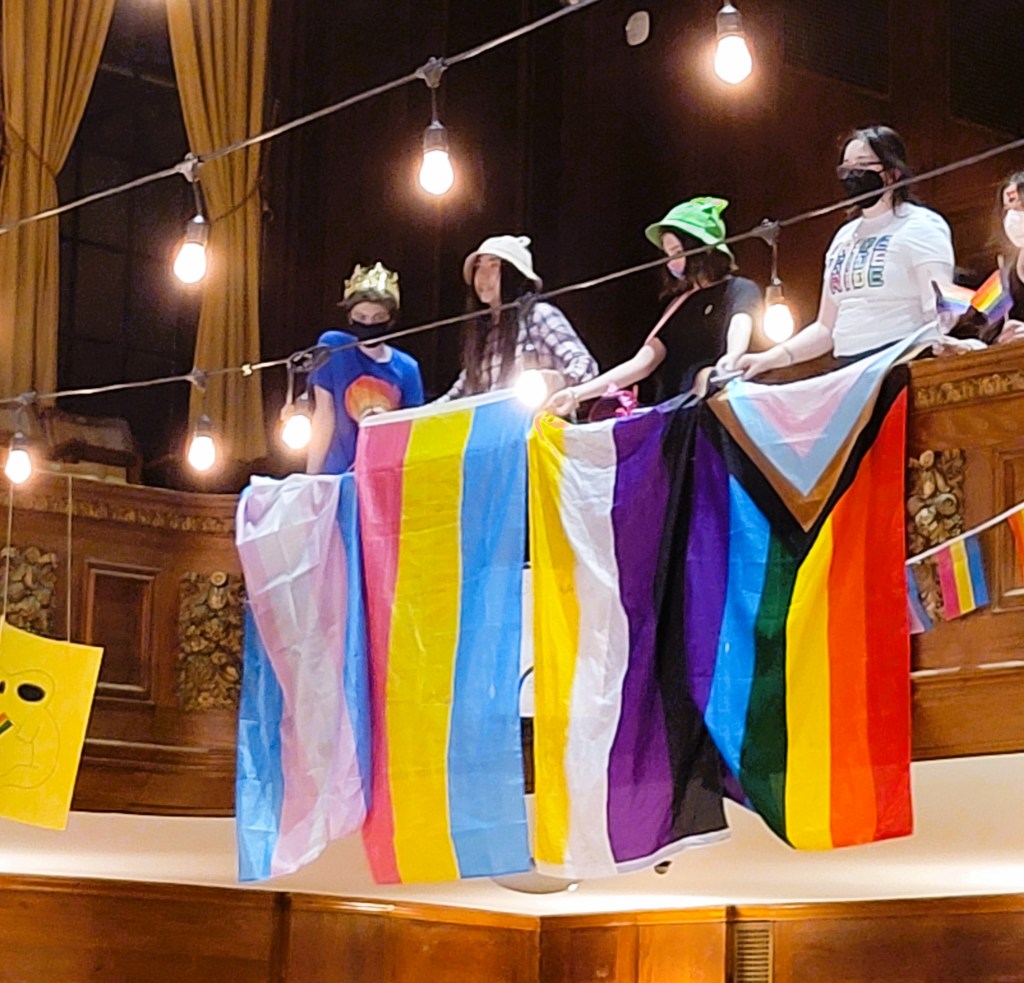
Many of the attendees were middle and high school students, a number of whom wore transgender Pride flags as capes.

Assistant Superintendent of Schools Dr. Roderick MacNeal, who chairs the Arlington Public Schools LGBTQIA+ Rainbow Task Force, welcomed attendees. He provided an overview of the most recent results from the Arlington portion of the Middlesex League Youth Risk Behavior Survey (YRBS).

The Middlesex League YRBS surveys students in 11 school districts in Middlesex County to capture vital information related to health status and behaviors that can put the health of students in middle and high school at-risk. In addition to Arlington, the communities of Belmont, Burlington, Melrose, Reading, Stoneham, Wakefield, Wilmington, Winchester, Woburn, and Watertown also participate.

Key findings related to mental health found that around one-quarter of Arlington High School students (27%) and middle school students (23%) reported that their mental health was “not good most of the time or always.” Among all students, cisgender male students reported the lowest rates of mental health issues with 13 percent of high school and 15 percent of middle school students reporting that their mental health was “not good most of the time or always.” Genderqueer students, loosely defined as LGBTQIA+ students, reported the highest rates of mental health issues with 68 percent of high school students and 52 percent of middle school students reporting that their mental health was “not good most of the time or always.”

By contrast, 30 percent of Black high school and middle school students of all genders and 32 percent of cisgender female high school students and 29% of cisgender female middle school students reported that their mental health was “not good most of the time or always.”

The numbers are a sobering reminder of the negative impact that stigma and discrimination based on anti-LGBTQIA+ beliefs can have. Such beliefs, when held by parents, faith leaders, school officials, and other community leaders can be devastating.

The Community Conversation was moderated by Jeff Perotti, the founding director of the Massachusetts Department of Elementary and Secondary Education’s Safe Schools Program for Lesbian, Gay, Bisexual, Transgender, Queer, and Questioning Students. Three students from Arlington High School’s Gender Sexuality Alliance, a parent of one of the students, a middle school teacher, and a graduate of Arlington Public Schools talked about ways that teachers and other staff can be strong allies to LGBTQIA+ students. Strategies can range from putting rainbow stickers on a classroom door and disclosing pronouns in a matter of fact way at the start of the school year.

Students said that the most powerful thing teachers can do, however, is to confront intolerant behavior immediately and facilitate discussion that leads to greater understanding.

The next Community Conversation will be held Tuesday, April 26 at Arlington Town Hall at 6:45 p.m. You can register for the event here: https://docs.google.com/forms/d/e/1FAIpQLSdkvErKMmka3eOg7lJXYqnKuwZ967Doh55Spjr0qAL-zCrWBA/viewform